





Eye For Film >> Movies >> Short Summer (2025) Film Review


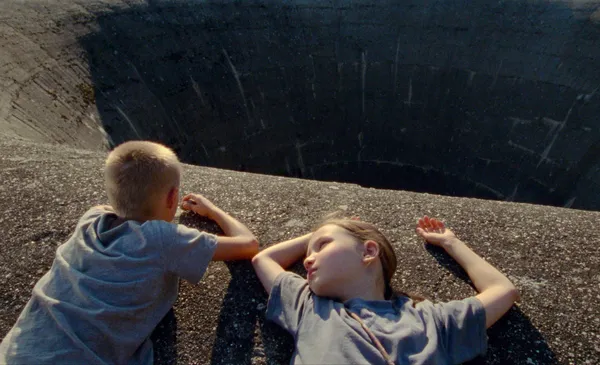

A languid summer unfolds for eight-year-old Katya (Maiia Pleshkevich) but just as the sun dapples down through the trees, so the shadows of war creep in at the margins.
The way time can stand still, or at least move slowly, for youngsters is perfectly captured by Nastia Korkia from the off as she indicates the rhythm her film will follow on a car journey observed from Katya’s perspective. A square of light dances across the grass verge as the youngster creates reflections with a piece of broken glass she has found. Although Katya remains the focus of the film, the Russian-born director, who now lives between Germany and France, constantly uses the full depth and width of the frame so that we observe things which an eight-year-old wouldn’t notice.

The car is taking Katya to her grandparents (Yakov Karykhalin and Aleksandr Karpushin) house in the Russian countryside, where her equally young friends announce their presence by stopping the car in what they describe as an “anti-terrorist op”. The frontline of the Second Chechen War may be a long way off but its fallout is much closer at hand. As we watch the children have a kickabout, we become aware of a train carrying military ordnance trundling past in the background, elsewhere they play with a chunk of shrapnel which has already caused additional cuts to inquisitive hands since it disabled one boy’s dad. Battle lines are also being drawn on the homefront too as cracks begin to show in her grandparents' relationship.
Korkia, writing with Mikhail Bushkov, captures the essence of childhood, from tossing stones in a hole to riding bikes they’ll grow into and learning how to peel mushrooms from grandad. The children are treated with naturalism, they talk about the sound a stone makes as it falls or shout as they play tag rather than engaging in any sort of adult conversation. We don’t need Katya to voice things like boredom, as we can see it from the way she lies on her back on a long car journey, flipping the ceiling light on and off with her foot. Beautifully precise framing is realised throughout with cinematographer Evgeny Rodin, whether Korkia is keeping the car with Katya in the background of a shot while she shows what her grandad is doing in the foreground or showing us Katya’s point of view as she stumbles on a lover’s tryst.
Normality is cut through with the volatility of war, most clearly in the form of a PTSD sufferer who wanders like a stray bullet through the film. That reflection of light might keep dancing for now, but the question lingers, for how long?
Reviewed on: 03 Sep 2025


